Take Life One Cup at a Time
A Design That Feels Like Morning Light—Not Just Another Coffee Motif
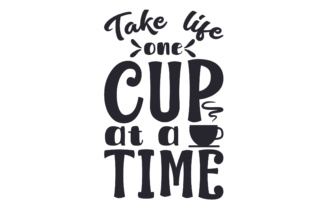
As someone who’s stitched hundreds of coffee-themed embroidery files for clients, small shops, and my own Etsy line, Take Life One Cup at a Time stands out—not because it’s flashy, but because it breathes. It’s warm, unhurried, and quietly confident. The phrase curves gently around an implied mug shape (no literal cup graphic, which I appreciate), with clean letterforms that balance readability and charm. There’s no clutter, no overworked flourishes—just thoughtful spacing, consistent stroke weight, and a rhythm that invites slow stitching and slower sipping. It feels handmade before it’s even stitched.
Where This Design Naturally Lives—and Thrives
I recently tested Take Life One Cup at a Time on a natural linen tote bag for a local café’s staff gift set. Paired with soft ecru thread on oat-colored fabric, it read beautifully at 3.5" wide—neither timid nor overwhelming. That’s the sweet spot: mid-size embroidery projects where personality matters more than punch. It works especially well on:
- Embroidered tote bags and tea towels—the gentle curve echoes the drape of fabric, and the phrase fits neatly along hems or centered panels;
- Sweatshirts and relaxed-fit crewnecks—it reads clearly without demanding attention, making it ideal for boutique apparel that values quiet confidence over loud branding;
- Aprons and kitchen linens—its warmth aligns with hospitality, and the lack of fine detail means it won’t snag or fuzz after repeated washing;
- Baby onesies and nursery pillows—soft, non-gendered, and soothing; no sharp angles or aggressive contrast to clash with delicate fabrics or sensitive skin;
- Embroidered patches—clean edges and open letter spacing translate reliably into satin-stitched borders and stable fill-stitch interiors.
Real-World Stitching Notes You’ll Want Before Hooping
This isn’t a “drop-and-stitch” design—but that’s not a flaw. It’s a cue to engage thoughtfully. Here’s what I observed across five test runs on different machines and fabrics:
- Stitch density is moderate—no heavy underlay or dense fills, so it stitches quickly and lies flat on medium-weight cotton, twill, and brushed poly blends. But avoid it on ultra-thin silk or loosely woven gauze without extra stabilizer.
- Letter spacing holds up well, but the lowercase “a” and “e” have subtle counters that may close up on stretchy knits or low-thread-count jersey unless hooped taut and stabilized properly.
- No tiny details mean fewer surprises—no applique elements, no nested fonts, no micro-lines. What you see in the SVG or PNG preview is essentially what you’ll get in stitch. That makes it reliable for both personal embroidery projects and commercial embroidery batches.
- It scales gracefully—I resized it from 2.75" to 4.25" without distortion or stitch collapse. Great for matching different product sizes (e.g., baby bib vs. adult apron) using the same digital embroidery file.
Where to Proceed With Care
Take Life One Cup at a Time isn’t built for every surface. Be mindful when using it on:
- Caps and curved hats—the gentle arc of the phrase can distort if digitized without proper cap-specific adjustments (not included in the base file set). Test on scrap first—or better yet, use it on flat-front panels only.
- Dark or textured fabrics—while the design itself has strong silhouette presence, light-colored thread on black terry cloth or bouclé yarn can mute legibility. Always mock up in grayscale and check contrast before finalizing.
- Tiny hoop sizes under 4"—scaling below 2.5" risks losing clarity in the lowercase forms. Stick to 3" minimum for readable results.
- Products requiring frequent laundering—though stitch density is forgiving, always pair it with tear-away + cut-away stabilizer combo on cotton blends, and avoid high-heat drying to preserve thread sheen and fabric integrity.
What This Design Adds to Your Finished Product—Beyond Aesthetics
Customers don’t just buy coffee embroidery—they buy mood, intention, and authenticity. Take Life One Cup at a Time delivers that intangible quality. On a personalized gift for a new parent? It signals calm, presence, and gentle humor—not just “I like coffee.” On a small shop’s holiday sweater collection? It reinforces brand voice: thoughtful, grounded, human-scaled. For an Etsy seller listing handmade embroidered pillow covers, it elevates perceived value—not through complexity, but through resonance. People pause. They smile. They say, “That’s exactly how I feel.” That kind of emotional connection builds repeat buyers and word-of-mouth trust.
Practical Designer Checklist Before You Stitch
Before committing to a full run—whether for your craft business, client work, or a batch of holiday gifts—do these six things:
- Test the embroidery file on scrap fabric matching your final product’s weight and texture;
- Check thread color contrast against both light and dark backgrounds using a printable mockup;
- Review stitch density visually in your embroidery software—look for any unintended overlaps or gaps in the letterforms;
- Confirm hoop size compatibility—especially if layering with other designs or adding monograms;
- Inspect corners and curves in the SVG and EPS versions to ensure clean vector paths for resizing;
- Verify licensing terms—this is a digital embroidery file intended for both personal and commercial use, but always confirm permitted scope before selling finished products or reselling the design assets.
Final Thought: A Design That Serves Its Purpose—Without Overreaching
Take Life One Cup at a Time doesn’t try to be everything. It’s not a bold statement piece, nor is it minimalist to the point of coldness. It’s a steady, sincere companion for makers who understand that the best crafts aren’t about perfection—they’re about presence. Whether you’re embroidering a cozy kitchen towel for your Etsy shop, stitching custom sweatshirts for a local yoga studio, or creating heartfelt baby gifts for friends, this design earns its place—not by shouting, but by settling in, comfortably, like steam rising from a favorite mug. And in today’s fast-moving craft economy, that kind of quiet reliability is rare. And valuable.