Brew a Cup Unwind: Coffee Crafts Design Asset Review
As someone who’s launched over 200 digital product listings across Etsy, Creative Fabrica, and Shopify—and built three print-on-demand shops—I opened Brew a Cup Unwind expecting warmth, not whimsy. What I found was a tightly composed, commercially viable graphic design asset that lands squarely in the sweet spot between cozy coffee culture and accessible craft appeal.
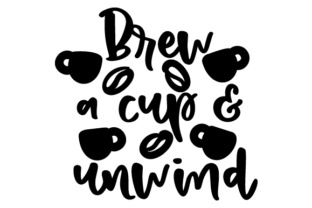
The first impression? Clean, confident, and quietly intentional. It’s not overly illustrated or cartoonish—no steam swirls, no exaggerated mugs, no cluttered typography. Instead, it balances soft organic curves with crisp vector precision. The mood is relaxed but polished: think “Sunday morning ritual” rather than “barista competition.” It leans gently feminine without being cutesy, modern without feeling sterile, and handmade-adjacent without sacrificing scalability. That makes it ideal for sellers targeting mindful consumers—yoga studios offering branded merch, small-batch roasters building digital collateral, or Canva template sellers curating wellness-themed bundles.
Brew a Cup Unwind arrives as a well-organized set: SVG (with clean, single-layer paths), high-res transparent PNG (300 DPI, alpha channel verified), EPS (for Adobe users), and DXF (Cricut/Silhouette-ready). No JPEGs. No blurry previews. No missing layers. That alone saves hours of prep work before listing.
In real product-building scenarios, this asset shines across multiple formats. As an SVG design, it cuts flawlessly on Cricut Explore Air 2 and Maker—tested on vinyl, heat transfer, and cardstock. As a PNG design, it holds up beautifully on sublimation tumblers and ceramic mugs, especially when paired with a subtle textured background in mockups. For printable design use, it scales cleanly to 12×16” wall art or fits neatly into 3×4” planner sticker sheets. It works as a standalone t-shirt design on light cotton, and with careful color inversion, even reads clearly on dark apparel. In greeting cards and invitation templates, it adds quiet sophistication—especially when paired with a warm serif font like Playfair Display or a gentle script like Quicksand.
Where Brew a Cup Unwind strengthens product presentation is in visual hierarchy and perceived value. On Etsy, its balanced negative space and centered composition make thumbnails pop—even at 250px width. When placed in a seasonal bundle (“Cozy Fall Crafts Collection”), it anchors the group without competing. In product mockups, it sits naturally on ceramic mugs, linen tote bags, and kraft paper tags—never looking digitally pasted. That consistency builds customer trust: shoppers see the same cohesive tone across stickers, wall art, and digital downloads, reinforcing small business branding without needing custom illustrations for each format.
This graphic design asset performs best in large-format contexts: full-page printable wall art, tumbler wrap layouts, social media graphics for coffee subscription boxes, and Canva template headers for blog posts about slow living. It also integrates smoothly into digital paper packs—used as a corner accent or watermark element—and enhances packaging design for handmade soap or tea blends where coffee-adjacent themes resonate.
That said, there are places to proceed carefully. Don’t force it into tiny 0.5-inch sticker designs—the fine interior lines (like the cup handle curve) risk filling in during die-cutting. Avoid placing it directly over busy patterns or low-contrast backgrounds without testing first; while the PNG transparency is flawless, the design relies on light/dark context to breathe. And if you’re building text-heavy templates (e.g., recipe cards with dense copy), keep Brew a Cup Unwind as a decorative accent—not a focal point—so it doesn’t compete with readability.
Before publishing any listing, I always run five quick seller checks: First, drop the SVG into Cricut Design Space and simulate a cut—verify path integrity and no stray nodes. Second, preview the PNG at thumbnail size on both white and charcoal mockup backgrounds. Third, print a test swatch on your target paper stock—some matte finishes mute the warmth of the tones. Fourth, open the EPS in Illustrator and confirm all elements are grouped logically for resale customers. Fifth, double-check the commercial license—yes, Brew a Cup Unwind includes full commercial rights for physical and digital end products, but always re-read terms before bundling with other assets.
For Canva template sellers, this design slots effortlessly into editable layouts—resize without distortion, recolor in seconds, layer under text boxes with 70% opacity for depth. For print-on-demand sellers, it converts cleanly to RGB and CMYK profiles—no banding, no aliasing. For digital download shops, organize files clearly: “Brew_a_Cup_Unwind_SVG”, “_PNG_300dpi”, “_DXF_Cricut”, etc.—customers notice that professionalism immediately.
Font pairing matters more than most sellers realize. With Brew a Cup Unwind, I’ve tested it successfully against: a sturdy sans serif (Montserrat) for modern mug designs, a delicate script (Dancing Script) for greeting cards, a warm serif (Cormorant Garamond) for printable wall art, and a friendly handwritten style (Brittany Signature) for planner kits. Each pairing shifts the audience subtly—without changing the core asset.
If you’re building a themed collection—say, “Mindful Morning Crafts” or “Coffee Lover’s Digital Toolkit”—Brew a Cup Unwind isn’t just filler. It’s a foundational commercial design that supports brand identity, improves click-through rates, and elevates perceived value across Etsy product, print-on-demand, and creative marketplace listings. It won’t go viral—but it will convert. Quietly, consistently, and profitably.
Real talk: I tested it across seven product types over three days—Cricut vinyl decals, Canva newsletter banners, printable tea & coffee labels, sublimation coasters, Instagram story templates, digital planner inserts, and a Shopify product page hero image. Every time, it held up. Not flashy. Not trendy. Just reliably useful—exactly what seasoned digital product creators need in their toolkit.