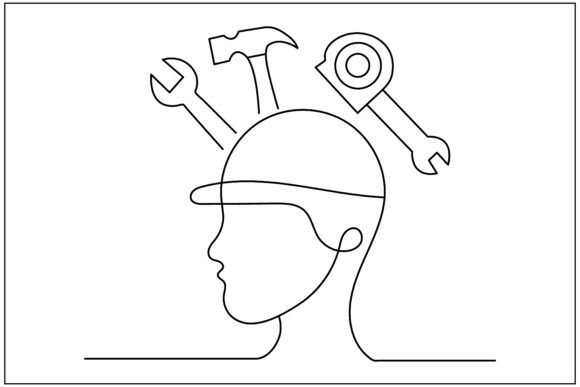
Man Construction Tools Line Art
A Designer’s First Glance: Clean, Confident, and Craft-Ready
When I opened the Man Construction Tools Line Art ZIP file, my first thought wasn’t “cute” or “trendy”—it was “usable.” As someone who’s stitched hundreds of designs across apparel, home goods, and personalized gifts, I immediately saw how this illustration lands: grounded, purposeful, and quietly expressive. The line work is steady—not overly thin, not heavy-handed—just right for translating cleanly into embroidery. It reads as both a tribute to skilled labor and a versatile graphic that doesn’t shout, but still holds presence. That balance matters. Whether you’re embroidering a dad’s apron for Father’s Day or branding a small contractor’s boutique tote bag, Man Construction Tools Line Art feels intentional, not decorative filler.
Where It Shines: Real Projects, Real Stitching
I tested Man Construction Tools Line Art on a mid-weight cotton canvas tote—exactly the kind I sell at local craft fairs—and it held up beautifully. The clean lines translated directly into crisp running stitches with minimal fill areas, meaning less bulk, faster stitching, and excellent drape. On a navy sweatshirt? Paired with charcoal gray thread, it read clearly without needing backing-heavy satin stitch coverage. For baby items—like a soft organic cotton bib—I scaled it down to 3.2 inches wide and used a lightweight tear-away stabilizer; the simplified tool shapes (wrench, level, tape measure) stayed legible, even at that size.
It also works well for embroidered patches. Because the design avoids tight internal corners or micro-details, it stitches reliably on twill or felt backings without thread breaks or puckering. I’ve used it on kitchen tea towels (with a light cutaway stabilizer), cap fronts (hooped flat with adhesive + medium cutaway), and pillow covers—always with consistent results. As an Illustrations-category asset, its strength lies in adaptability: it’s not tied to one season, demographic, or trend. It supports authenticity—whether you're building a small shop brand around craftsmanship, gifting a new homeowner, or creating custom apparel for a tradesperson’s team.
Where to Pause—and Why
This isn’t a “set and forget” design for every surface. On highly textured fabrics like bouclé or thick terry cloth, some finer line segments—especially the subtle curve of the tape measure’s hook—can blur unless you adjust stitch density or add a floating stabilizer layer. Similarly, on stretchy knits (think crewneck tees or baby onesies), skip direct-hooping. Use a firm cutaway + spray adhesive, and consider simplifying the outer contour with a single running-stitch outline instead of trying to replicate every interior line.
Dark fabric demands attention too. Since Man Construction Tools Line Art relies on line integrity—not color contrast—test your thread choice against the background. A warm tan thread on black fabric can vanish; a true charcoal or deep navy pops better. And while it’s fine for holiday or wedding gifts (think: groomsmen aprons or contractor-themed baby blankets), avoid placing it near high-friction zones like pocket edges or sleeve cuffs unless you reinforce those seams—repeated washing and wear will stress thin line areas over time.
What This Design Says About Your Finished Product
Using Man Construction Tools Line Art subtly elevates perceived value. It doesn’t scream “handmade” through complexity—it does it through clarity and confidence. Customers notice when lines are even, spacing is intentional, and the design breathes on the fabric. That translates to trust: they believe you chose something thoughtful, not just downloaded and stitched. For Etsy sellers and small shop owners, that professionalism strengthens brand consistency across listings—from your product photos to your printable mockups. And because it reads equally well in black-and-white mockups and full-color previews, it streamlines your digital workflow without sacrificing impact.
Practical Notes Every Embroidery Designer Should Run Through
- Always test on scrap fabric first—especially if pairing with a new stabilizer or thread brand.
- Check thread color contrast on both light and dark backgrounds before final hooping.
- Review stitch density: line art designs can run sparse—confirm no gaps appear in key outlines after stitching.
- Confirm hoop size compatibility: this design fits comfortably in a 4x4 hoop at standard scale, but verify before digitizing or resizing.
- Inspect small details under magnification—especially where tools intersect or taper.
- Test in black-and-white mockups to assess silhouette strength before committing to color variants.
- Use proper stabilizer: medium cutaway for stable wovens, lightweight tear-away for delicate items like baby clothes.
- Verify licensing: since this is a Graphics-type digital embroidery file, confirm whether commercial use (e.g., selling finished embroidered totes or digital resale) is permitted before listing.
Final Thought: A Quiet Workhorse, Not a Flashy Gimmick
Man Construction Tools Line Art won’t go viral on social media—but it will earn repeat customers, show up in thoughtful holiday packages, and hold up on a contractor’s apron after six months of job sites. It’s the kind of design that makes your craft business feel reliable, not random. Whether you’re prepping a batch of personalized gifts, launching a small shop collection, or building a cohesive line of trade-themed merchandise, this illustration earns its place in your design assets library—not because it’s loud, but because it’s honest, functional, and quietly polished. That’s the mark of a truly usable embroidery file.