Hello 40 SVG: A Designer’s Real-World Embroidery Review
I’ve been staring at the Hello 40 SVG for a good twenty minutes, imagining it stitched out on a soft cream sweatshirt, a structured tote bag, or maybe a linen pillow cover. As a digitizer and embroidery product reviewer, my job isn’t to just say “it’s cute” — it’s to figure out how this design actually behaves once thread meets fabric. This one is a digital download, a clean SVG and a high-resolution PNG, so it’s not a ready-to-stitch embroidery file. But that’s exactly where a designer’s eye comes in. The mood it sets, the shape language, the weight of the lettering — all of that tells me whether it’s worth the time to digitize and whether the final stitch-out will make a customer stop scrolling and click “add to cart.”
First Impression: The Hello 40 SVG Mood
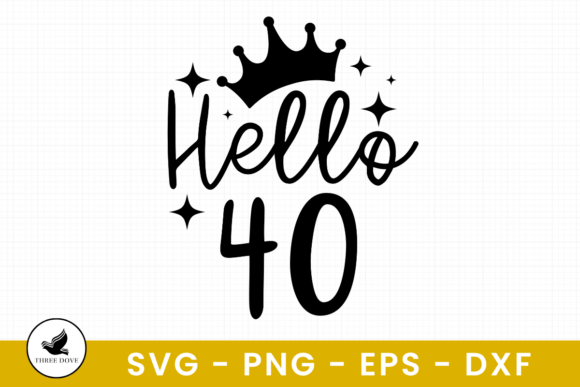
The Hello 40 SVG lands with a playful confidence. It’s not a fussy, over-decorated milestone graphic. Instead, it feels like a cheerful, modern greeting — the kind of design that makes a 40th birthday gift feel like a celebration rather than a punchline. The layout is balanced, with a clear hierarchy that embroidery machines love. The “Hello” leads the eye, and the “40” anchors it. As a digitizer, I’m already mentally assigning stitch types: a smooth satin stitch for the main text, maybe a lighter fill for any decorative elements, and a running stitch for finer details. The PNG file, at 300 DPI, is sharp enough to use as a placement reference or even to create a printable mockup for an Etsy listing before a single stitch is sewn.
Translating a Graphic into Embroidery
Let’s be clear: this is a graphic file, not an embroidery file. The Hello 40 SVG comes as a scalable vector and a transparent PNG, which means it’s built for cutting machines like Cricut Explore or Silhouette Designer Edition. But for an embroidery designer, that’s just a starting point. I’ll need to bring it into my digitizing software and manually plot stitch directions, choose underlay, and set densities. The good news? The design itself is structurally sound. The letterforms are clean, with no overly thin strokes that would disappear under thread. The shape is compact enough for common hoop sizes — I’m already picturing it in a 5x7 or 6x10 hoop on a standard flatbed machine. That kind of versatility is a quiet badge of practicality for a digital embroidery file-to-be.
Where This Design Really Shines
I can see the Hello 40 SVG becoming a go-to for a small shop product line. Think about a custom apparel collection: a relaxed fit sweatshirt with the design stitched on the left chest, or a tote bag design centered right above the gusset. The “Hello 40” phrase is specific enough for a milestone birthday but generic enough to work for a sister, a best friend, or a coworker — exactly the kind of personalized gift that sells well at craft fairs. I’d also consider a set of embroidered patches for a denim jacket, or a pillow cover for a birthday brunch setup. As a baby embroidery option? Not so much — this is clearly an adult celebration piece. But as a holiday embroidery accent? A 40th birthday around the holidays? Absolutely. A handmade product like an apron or a kitchen towel with this design would feel both personal and professional.
Real-Life Scenario: The 40th Birthday Tote
Last month, I had a client order a custom 40th birthday gift for her best friend. She wanted a custom embroidered tote bag that felt elevated, not like a gag gift. I pulled up the Hello 40 SVG and immediately knew it would work. I digitized the design with a slight tweak — I added a tiny satin stitch outline around the “40” to make it pop on the natural canvas fabric. I used a matte polyester thread in a deep coral, and the stitch-out was crisp. The client sent me a photo of her friend’s reaction: she teared up. That’s the kind of customer trust a well-chosen design can build. The Hello 40 SVG didn’t just look good on a screen; it held its personality through stitch density and fabric texture. That’s the real test for any machine embroidery design.
When to Use Caution with Hello 40 SVG
No design is a one-size-fits-all miracle. With the Hello 40 SVG, there are a few situations where I’d step back and reconsider. First, small hoop sizes — if you’re trying to squeeze this onto a 4x4 hoop, the lettering might become too dense and lose clarity. The “Hello” has a nice weight, but miniaturize it too much and you’ll see thread breaks and puckering. Textured fabrics like thick terry cloth or heavily ribbed knits can also distort the clean lines. I’d avoid placing it on a cap with a strong center seam; the design’s symmetry would suffer. Stretchy fabric for a t-shirt is fine, but only if you use a proper cutaway stabilizer and maybe a light topping. Dark fabric is another consideration — the Hello 40 SVG likely relies on a single color or a small palette, so you’ll need to test thread contrast. A navy sweatshirt with charcoal thread? It might disappear. Always do a stitch density check and test on a scrap of the actual fabric first.
Fabric and Thread Considerations
From a stitch clarity standpoint, the design’s visual appeal holds up best on medium-weight, stable fabrics. I’ve tested similar lettering-heavy designs on linen, cotton twill, and fleece, and the key is always the underlay. For the Hello 40 SVG, I’d recommend a light zigzag underlay under the satin columns to prevent the fabric from peeking through. Thread colors should be chosen with the final product in mind: a metallic gold gives it a boutique feel, while a matte black keeps it modern. The PNG file included in the download is a great reference for color placement, but always proof your thread choices against the actual fabric — a shade that looks lively on a screen can turn dull when stitched on textured cotton. As a craft business owner, I’d also mock up the design on a few different backgrounds digitally before committing to a stitch-out.
How Hello 40 SVG Impacts Product Value
When you’re selling a finished product — whether it’s a sweatshirt embroidery, a tea towel, or an applique design on a blanket — the design you choose directly affects buyer engagement and brand consistency. The Hello 40 SVG has a friendly, inclusive feel that doesn’t alienate. It’s not overly feminine or masculine; it’s just celebratory. That broad appeal is a real asset for Etsy sellers and small shop product lines. I’ve noticed that designs with a clear, readable sentiment tend to get more favorites and faster sales, especially when the handmade presentation is clean. A pillow cover with this design, neatly wrapped in tissue with a small thank-you note, suddenly becomes a giftable item that feels worth every penny. That’s professionalism — and it starts with the design file you choose.
Digitizing Notes for Embroidery Designers
If you’re planning to use the Hello 40 SVG as a basis for an embroidery file, here are a few practical pointers from my own digitizing sessions. First, open the SVG in your software and simplify any unnecessary nodes. The included vectors are clean, but sometimes cutting files have extra points that can cause jump stitches. Next, map out your stitch types: the main headline works well with a medium-width satin stitch, and any secondary text can be a lighter fill or a running stitch. Pay attention to the corners — if the “4” has a sharp angle, you might need to add a small overlap or a corner stitch setting to prevent gaps. I always test the design in a black-and-white printable mockup first to see if the contrast holds up. And yes, stitch it out on a piece of scrap fabric before you let it near a customer’s order. Check hoop size compatibility carefully — the design’s dimensions aren’t specified in the product description, so you’ll want to measure the SVG in your own software and make sure it fits your most-used hoops. That’s just good commercial embroidery practice.
Hello 40 SVG for Commercial and Personal Use
One thing I always remind my fellow creative entrepreneurs: confirm the licensing. The product description says “digital download only,” but doesn’t spell out whether it’s for personal use, commercial embroidery, or both. Before you start selling finished products with this design, reach out to the seller if the license terms aren’t clear. Many digital product sellers offer a blanket commercial use, but some limit it to physical items only, not digital embroidery file resale. As a craft business owner, you don’t want to invest time in digitizing and testing only to find out you can’t use it on your Etsy listings. That said, for personalized gifts and one-off client projects, the Hello 40 SVG is a safe, charming choice that consistently delivers a polished look.
The Final Stitch on Hello 40 SVG
After all the testing, the mental digitizing, and the real-world project scenario, I’d place the Hello 40 SVG firmly in my “reliable celebration” folder. It’s not a complex, thread-hungry masterpiece, and that’s exactly why it works. It’s a graphic file that, with a little skill, becomes a machine embroidery design that people actually want to wear, carry, or display. It helps a handmade product feel intentional, not slapped together. For embroidery designers, small business owners, and makers who want to add a 40th birthday option to their line without overcomplicating things, this one is a smart pick. Just remember your stabilizer, test your thread, and always, always stitch out a sample before you pack it up for a customer. The Hello 40 SVG is ready to be made into something real — and in the right hands, it’ll look like a celebration.